
Sandusky Past Resident Sources
A backward Sandusky address trail uses several eras of evidence. The current parcel record anchors the place. Recorder instruments can establish recorded transfers. Library directories and newspapers provide dated household or notice leads. Maps and surveys help reconcile the land itself. Treat the coverage dates exactly as the custodians state them, especially where an online portal has a later start than the records in the office.
| Source | Verified era | Where held | What it can show |
|---|---|---|---|
| Recorder online-record statement | From 1987 | Erie County Recorder online route | A recorded-instrument lead, subject to the FAQ distinction. |
| Recorder FAQ index and images | From 1990; older documents added daily | Recorder Self-Service and counter | Searchable index/image statement and a route to older copies. |
| Sandusky city directories | 1855 to present, with gaps | Sandusky Library Archives Research Center | Printed name and address entries, sometimes street-census context. |
| 1915 street census | 1915, pages 245 to 415 | Sandusky Library | Address-organized household notation for one documented year. |
| Local newspaper microfilm | Back to 1822 | Sandusky Library | Dated notices and obituary leads; title runs vary. |
| Sandusky Sanborn map | 1905, republished 1955 | Library of Congress | Building and street context for its published date. |
For a later transfer, begin with the Recorder and parcel sources. For a nineteenth- or early-twentieth-century household question, start with the Library directory and map context, then use legal descriptions and recorded material to test whether the old and current address refer to the same place. Historical tax maps and Engineer surveys can be useful when a lot changed, but no item-by-item annual inventory was verified.
Sandusky Resident Record Split
The Erie County Recorder gives two precise online-start statements that should be kept together. Its home page says online records date back to 1987. Its FAQ says indexing and images go back to 1990, while historic documents before then are being added daily. These statements do not make an absent result conclusive, and neither statement promises every record for the cited period is online. Federal Tax Liens and UCCs are not included for 1987 through 1999.
The Recorder FAQ and search instructions show the route used to open a public image: pass the CAPTCHA, accept the disclaimer, select Public Records Search, enter a party in Both Names as Last First, and use the paper icon or VIEW for a match. The FAQ says an online image may be downloaded or printed free.
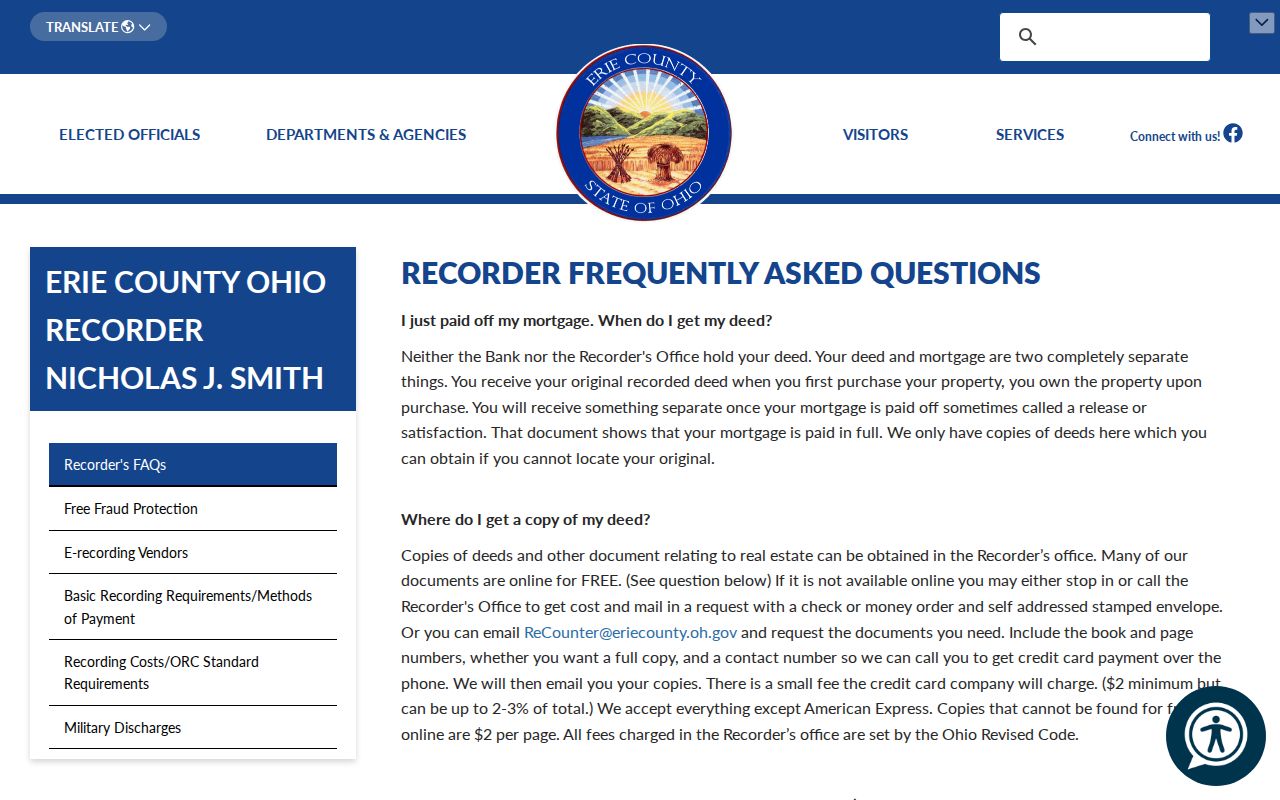
For an earlier or missing instrument, request a copy in person, by mail, or by email. Give book and page information, say whether the full document is wanted, and include a telephone contact for card payment. The stated price for copies not freely found online is $2 per page.
Sandusky Past Owner Deed Trail
Start a chain of title with place facts, not just a name. The Erie County Auditor Location Search can return the tax-year property record from an exact address. Then use the Parcel Viewer to retain the PIN, legal description, deed volume/page, sale date and amount, selected owner field, and parcel geometry when shown. A saved screenshot or PDF is more auditable than an unsourced transcription.
- Record the address exactly as the Auditor presents it, along with tax year and PIN or property number.
- Open the parcel in the viewer and compare its legal description and deed clue before moving to the Recorder.
- In Recorder Self-Service, search the documented party form, then open the transfer or deed image for a matching record.
- Use the previous party named in that instrument as the next search key. Match the parcel or legal description, recording reference, and date every time.
- Continue one instrument at a time. If the image is unavailable, request it with known parties, date, legal description, and recording reference.
- For an easement, subdivision, lot-line change, or changed legal description, seek the relevant historical tax map or recorded GIS survey by title and date.
- Grantor and grantee
- The grantor transfers an interest in the document; the grantee receives the stated interest.
- Chain of title
- A sequence of recorded instruments followed backward or forward through the same property evidence.
- Legal description
- The land description used in property and recorded documents. It can be more stable than a street-address label.
The Recorder makes permanent records of land conveyances and encumbrances, but it does not perform the history search or give title advice. A chain built from accessible records is historical research, not a legal conclusion.
Sandusky Tax Maps and Surveys
Historic map and survey evidence can explain why a past resident search stops at a changed lot or unfamiliar address. The Auditor's Historical Tax Maps page points to an official repository and says the materials are not ADA compliant because of age and volume; contact the office for access assistance. The County Engineer's surveys route links recorded GIS surveys and a current City of Sandusky survey PDF. These are tools for a specific lot, legal description, or survey question, not a promise of a complete annual map run.
The Erie County historical tax maps can form a useful bridge between a parcel clue and older land context when a precise map is located.
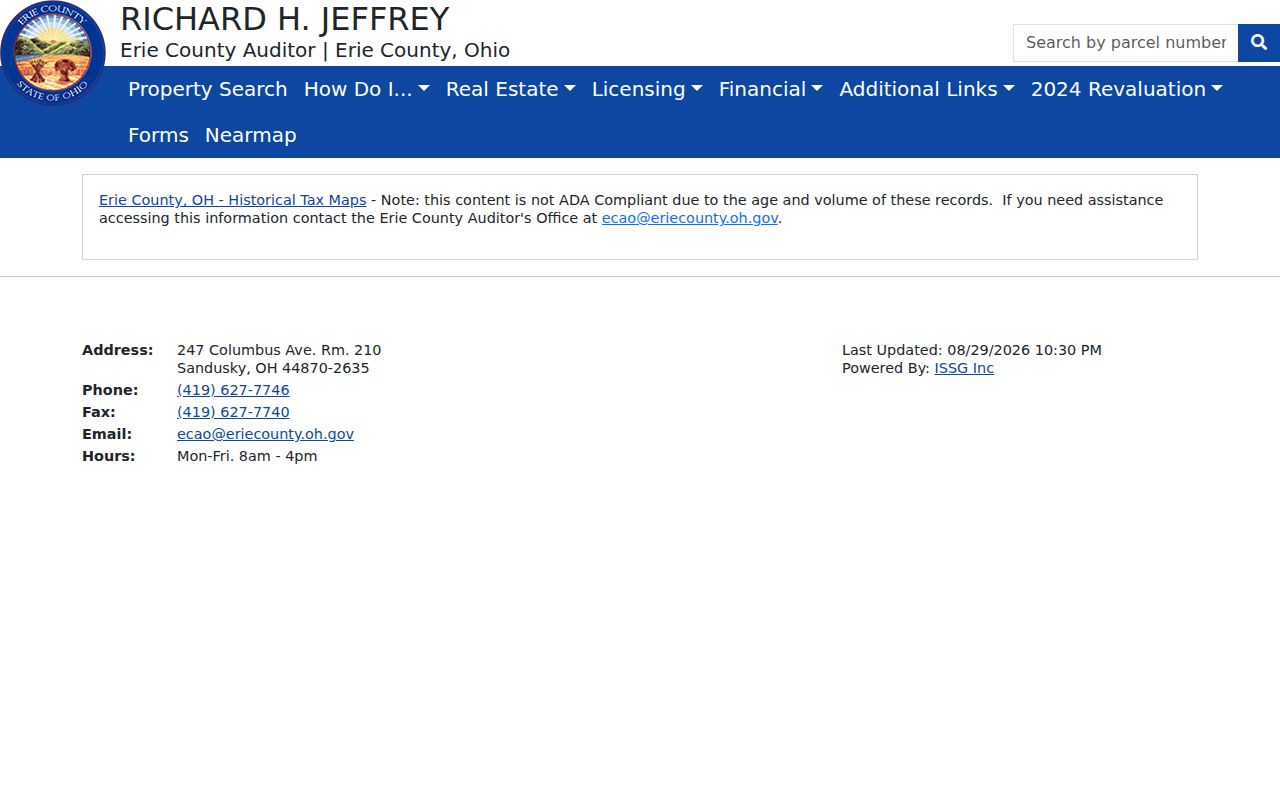
Keep a map's title and date with the deed notes. The research did not identify a citywide address-conversion table, so an older number should never be converted automatically.
Sandusky Past Resident Directory Clues
City directories can add the household layer that deeds do not provide. The Sandusky Library Archives Research Center holds city directories from 1855 to the present, with gaps. The 1915 volume is a strong address tool because its street census, on pages 245 through 415, lists streets alphabetically and records a household head, spouse, and children at printed addresses. It is one dated printed source, not a continuous record of everyone who occupied an address.
Record a name exactly, including initials, abbreviations, telephone listing, and spelling. In the 1915 directory, italics mark an owner; a colon means wife of the prior person; a semicolon means children; a cross marks under 21; and double vertical marks indicate under 16. Preserve those marks. They are part of the source, not shorthand for a current relationship.
The Sandusky Directory Book identifies the local collection and its access routes. The Archives Research Center has microfilm reader-printers, a copier, quiet work space, and reference assistance, while its material does not circulate. A focused request with a surname, year, and street is more workable than an open-ended inquiry.
Sandusky Resident Census Pairing
Pair a directory clue with a separate federal census search rather than treating the directory as a replacement. The Library's historical workflow recommends recording the directory entry exactly, locating the same address in the street census where available, comparing the nearest earlier and later volumes, and then cross-checking the trail with parcel or deed evidence, a dated newspaper notice, cemetery information, and a historical map. For a post-1930 household question, federal census research is a separate step.
- Choose a confirmed directory year and preserve the address and notation exactly as printed.
- Check the nearest available directory volumes, allowing for the collection's gaps.
- Pair that dated entry with the separately researched census record for the period in question.
- Test the address against a deed or parcel clue and a dated notice before linking records.
Library databases add a local route for this work. Cardholders may access NewspaperArchive, Ancestry Library Edition, Fold3, African-American Heritage, and HeritageQuest through the Library gateway; the NewspaperArchive login requires a library card number and PIN. The verified access page does not establish every database's live fields or coverage.
The Sandusky Library research databases page is shown below. It is a starting point for authenticated historical research, not a substitute for checking the underlying item and date.
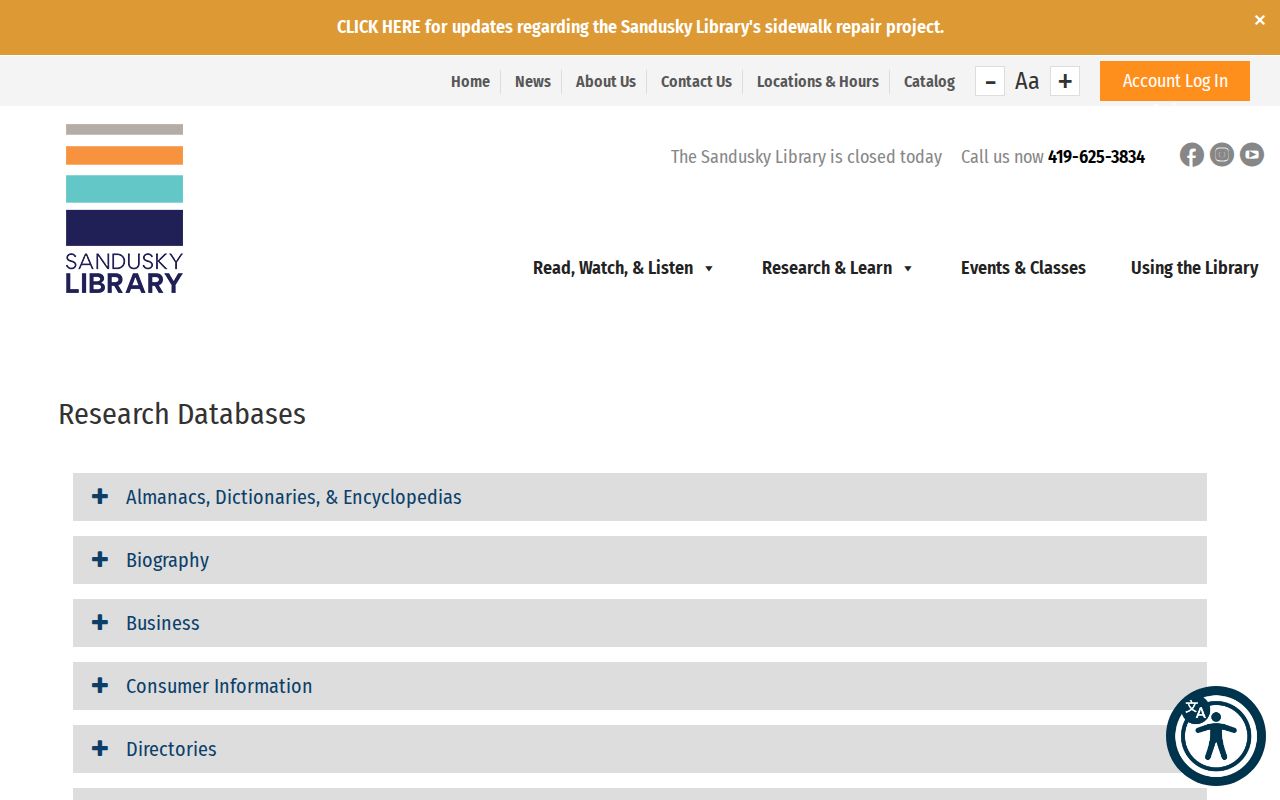
When a database result supplies a name or address lead, return to the directory, document, map, or newspaper record that fixes the claim to a date.
Sandusky Past Resident Map Context
Older maps can clarify place without proving an owner or household. The Library of Congress holds a Sandusky bird's-eye view dated 1870, and its Sandusky Sanborn resource is a 93-sheet set dated 1905 and republished in 1955. Use those maps to compare street arrangement, building footprint, or waterfront context at their published dates. They do not prove a present address, owner, or use.
Water Street is a key Sandusky example. It was formerly the shoreline, and later fill allowed railroad construction and what is now Shoreline Drive. An old source may therefore show a spatial relationship that a modern parcel map will not. Tie a directory address to a dated map, PIN or legal description, or recorded document before suggesting that an old address continues unchanged.
Note: Venice Village was annexed into Sandusky in 1963, so period sources may use “Venice” where a current civic address is described differently.
Sandusky Past Resident Endpoints
Obituaries, cemetery records, and probate material can close a historical trail after a directory or deed stops. Sandusky Library's local newspaper microfilm reaches back to 1822 and can be viewed, printed, or converted to a digital file with library equipment. The Library offers obituary copies by written request for $3 each, and larger requests may be referred to an independent researcher at the same rate. The Rutherford B. Hayes Ohio Obituary Index is another Library-linked lead, although its live filters and item coverage were not verified in the research.
The City of Sandusky confirms an online Oakland Cemetery burial-record search. Its public form exposes last name, first name, date interred, a date-range selector, section, lot, and AKA search, plus a printable map. A no-result user can call 419-627-5842. The Library also provides an on-site public computer for the City of Sandusky Oakland Cemetery Interment Record Index.
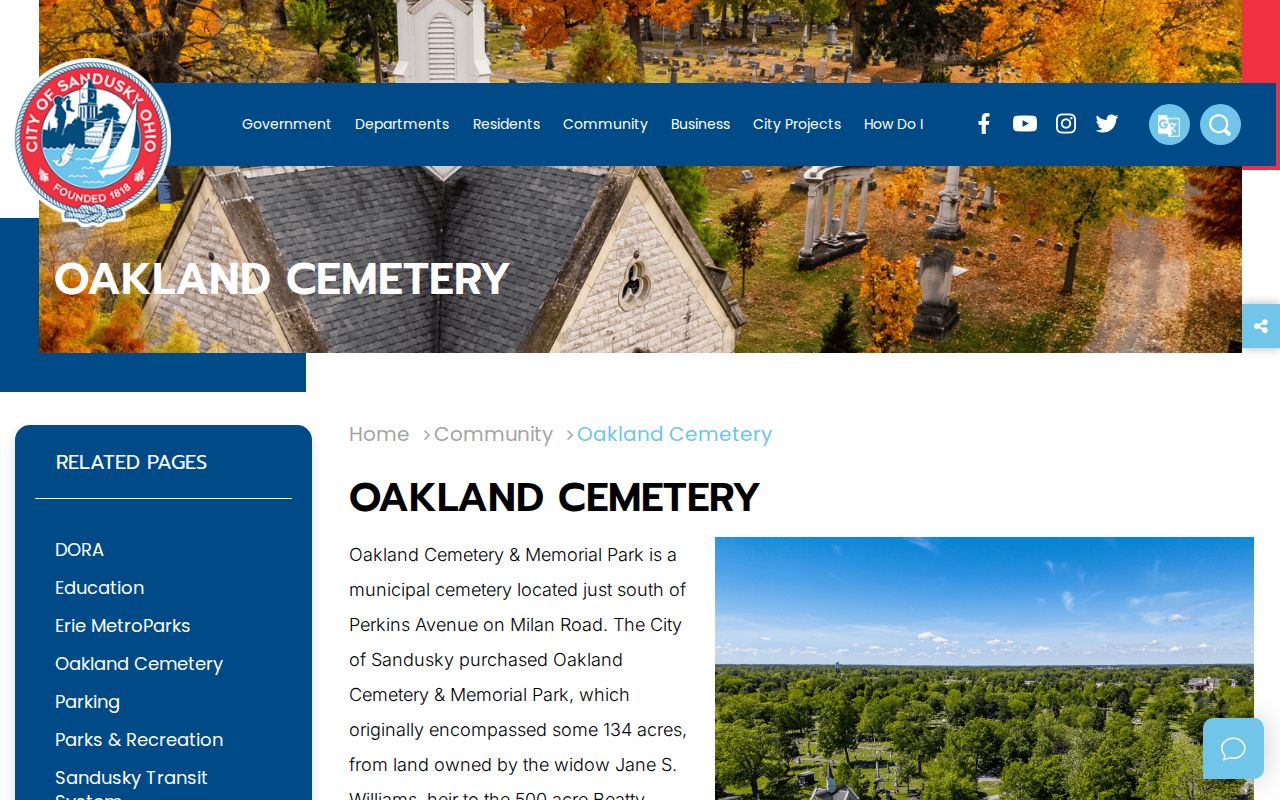
The online and in-library cemetery channels can corroborate a dated death or interment lead. They do not establish a complete residential history for a person or address.
Sandusky Past Resident Limits
Past-address research separates property history from household history. A deed records an interest in land. A tax record supports assessment context. A directory prints what its publisher recorded in a particular year. A cemetery or obituary can supply a dated endpoint. None alone proves every person who lived at an address, or that a historical listing remains true now. Records may also be redacted, protected, sealed, or unavailable online.
Lawful use. Sandusky house-history research is appropriate for family history, property history, and personal curiosity. Do not use historical or current records to stalk, harass, intimidate, or harm anyone.